 Plumbing
Sewer Line Repair, Cleaning & Trenchless Replacement in Roaring Spring, PA
A damaged sewer line is one of the most stressful problems a homeowner can face. In the past, fixing it meant bringing in an excavator and destroying your lawn. We offer a better way. We are Roaring Spring, PA’s leaders in sewer & drain solutions, moving from simple cleaning to advanced trenchless sewer line replacement. We fix the pipe underground with minimal digging, saving your property and your patience.
Still Unsure? Call and Speak to an Emergency Specialist
Hydro-Jetting & Drain Cleaning
Snaking a drain only punches a hole through the clog; it doesn't clean the pipe. We use hydro-jetting, which blasts high-pressure water into the line. This scours the pipe walls, removing grease, scale, and invasive tree roots. It is the most effective way to prevent recurring drain clogs.
Camera Inspection & Diagnosis
Before we dig or repair, we look. We feed a high-definition sewer camera into your cleanout to visually inspect the inside of the pipe. We look for root intrusion, bellies (sags), cracks, or offsets. This diagnostic step allows us to recommend the exact repair needed—whether it's a simple cleaning or a structural repair.
Trenchless Pipe Lining in Roaring Spring, PA
If your sewer line is failing due to roots or cracks, you don't always need to dig it up. We use Cured-In-Place Pipe (CIPP) lining. We pull a resin-coated liner into the damaged pipe and inflate it. Once it cures, it forms a rock-hard, jointless pipe-within-a-pipe that is guaranteed to last for decades. This "no-dig" solution is faster, cleaner, and often more cost-effective than excavation.
Frequently Asked Questions
- How do I know if my sewer line is broken? Common signs include frequent backups, gurgling toilets, wet spots in the yard, or a sewage smell outside the house.
- Will trenchless repair work for my home? In most cases, yes. However, if the pipe has completely collapsed or has a severe belly (dip), we may need to excavate that specific section to correct the grade.
- How long does trenchless replacement take? Usually 1 to 2 days, compared to a week or more for traditional excavation. It gets your plumbing back online much faster.
- Is hydro-jetting safe for old pipes?We always inspect the pipe with a camera first. If the pipe is structurally sound, jetting is safe. If it is crumbling, we will recommend replacement.
- Do you offer a warranty on the liner?Yes. Our liners typically come with a 50-year manufacturer warranty. It is a permanent solution, not a patch.
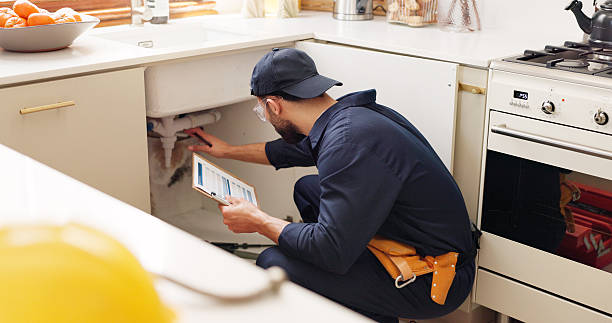
Advanced Technology for Permanent Repairs
Don't let a sewer problem destroy your yard. Choose the modern, minimally invasive solution that fixes the pipe for good.
Customer Reviews
"I was quoted $15k to dig up my driveway. These guys did the trenchless liner method for less and my driveway is untouched. Incredible."
"The camera showed tree roots growing right through the pipe. They jetted them out and lined the pipe. No backups since!"
"Very professional crew. They explained the whole process and finished the job in one day. Highly recommended."
Roaring Spring, PA Insights: Population,
Zip Codes, Influence, and Service Areas
Roaring Spring was established around the Big Spring in Morrison's Cove, a clean and dependable water source vital to the operation of a paper mill. Prior to 1866, when the first paper mill was built, Roaring Spring had been a grist mill hamlet with a country store at the intersection of two rural roads that lead to the mill near the spring. A grist mill, powered by the spring water, had operated at that location since at least the 1760s. After 1867, as the paper mill expanded, surrounding tracts of land were acquired to accommodate housing development for new workers. The formalization of a town plan, however, never occurred. As a result, the seemingly random street pattern of the historic district is the product of hilly topography, a small network of pre-existing country roads that converged near the Big Spring, and the property lines of adjacent tracts that were acquired through the years for community expansion. The arterial streets of the district are now East Main, West Main, Spang and Bloomfield, each of which leads out of the borough to surrounding townships. Two of these streets — Spang and East Main — meet with Church Street at the district's main intersection called "Five Points." The boundaries of the district essentially include those portions of Roaring Spring Borough which had been laid out for development by the early 1920s. This area encompasses 233 acres (0.94 km2) or 55 percent of the borough's area of 421 acres (1.70 km2). Since the district's period of significance extends to 1944, most of those buildings erected after the 1920s were built as infill within the areas already subdivided by the 1920s. In the early 1960s, the borough began to annex sections of adjacent Taylor Township, especially to the east around the then new Rt. 36 Bypass.
Zip Codes in Roaring Spring, PA that we also serve: 16673